 DOWNLOAD
 English
 русский
 Français
 Español
 عربى

Content
- 1 What an Inflatable Lounger Air Sofa Really Is
- 2 How It Fills With Air — No Pump Required
- 3 The Fabrics That Decide Whether It Holds Air
- 4 Where Cheap Air Sofas Give Up
- 5 Seams, Clips and the Details Nobody Inspects
- 6 Printing and Branding an Air Lounger
- 7 Care and Storage That Adds Seasons
- 8 Notes for Brands Sourcing Air Loungers
- 9 The Short Version
Ask a dozen people at a festival about the inflatable lounger air sofa and you will usually get one of two answers. Half will tell you it is the most comfortable ten dollars they ever spent. The other half will tell you about the one that went soft in twenty minutes and left them sitting on gravel.
The difference is rarely luck. It comes down to the coated fabric, the way the seams are sealed, and how carefully the roll end is finished — the parts nobody photographs and almost nobody talks about.
We are MSD, a producer of PVC and TPU flexible materials based in Haining, Zhejiang, and we have been coating fabric since 2002. Our materials go into stand-up paddle boards, inflatable boats, tents, advertising banners and, yes, air loungers. What follows is a practical look at the product from the inside: how it traps air, which fabrics work, where cheap versions fail, and how to keep one alive for more than a season.
What an Inflatable Lounger Air Sofa Really Is
A classic air sofa is a long sleeve of coated fabric, roughly 2.4 to 2.8 metres long and 60 to 80 centimetres wide, sealed at one end and wide open at the other. There is no pump, no valve and no frame. You swing it through the air, close the open mouth, roll it a few turns and clip it shut. The trapped air gives it volume, and your body weight raises the internal pressure until the whole thing firms up like a beanbag.
That simplicity hides a demanding set of material requirements. The coating has to be genuinely airtight. The base fabric has to resist puncture on sand, grass and stone. The seams have to survive being folded along the same line hundreds of times. And the finished lounger should still weigh under a kilo and a half so that it fits in a daypack.
How It Fills With Air — No Pump Required
The filling method is what makes the product work, so it is worth spelling out:
- Open the mouth wide and hold the far end away from you.
- Swing or drag the sack through the air in one smooth arc so it balloons behind you.
- Snap or pinch the open end shut before any air escapes — this is the step most people get wrong.
- Roll the open end towards your body three or four turns, pressing the trapped air forward as you go.
- Fasten the buckle so the roll cannot unwind, then sit down and let your weight do the rest.
The roll seal is the weakest point in the whole design, which is why the fabric around the mouth needs to be supple rather than slick. A stiff, heavily plasticised coating slides against itself and creeps open; a slightly textured surface grips and holds.
The Fabrics That Decide Whether It Holds Air
Almost every air lounger on the market is built from one of three fabric families, and each one behaves differently in the field.
PVC-Coated Polyester
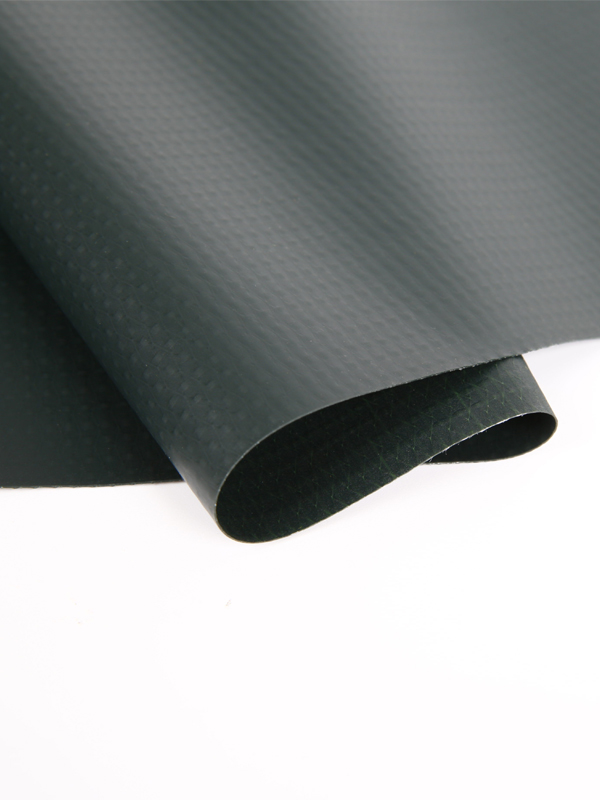
This is the workhorse. A woven polyester base, usually 300D to 600D, carries a PVC coating on both sides at a finished thickness of about 0.35 to 0.55 mm. It is inexpensive, tough, and straightforward to high-frequency weld. The trade-offs are weight, stiffness in cold weather, and the slow migration of plasticiser that can make an old lounger brittle. Most of the material we coat for this category sits here, and it is still the best value for promotional and event products. If you want a deeper explanation of the base construction, we have written a separate guide on what PVC inflatable fabric actually is.
TPU-Coated Fabric
Polyurethane coating on the same polyester base is lighter per square metre, stays flexible well below freezing, welds cleanly and carries a better environmental story — no chlorine in the formulation and an easier path at end of life. It costs more and punishes anyone who gets the welding temperature wrong, but for premium loungers sold into cold-climate markets it is hard to beat.
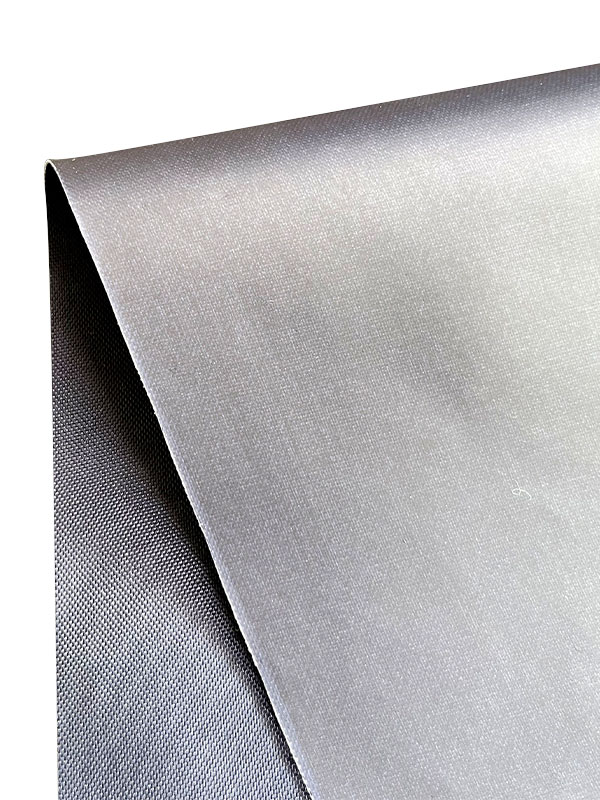 Customizable TPU Compound Fabric and FilmRecyclable TPU fabric and film with low-temperature flexibility, weldability and tear resistance for premium inflatable loungers and protective covers.View Product →
Double-Wall and Drop-Stitch Fabrics
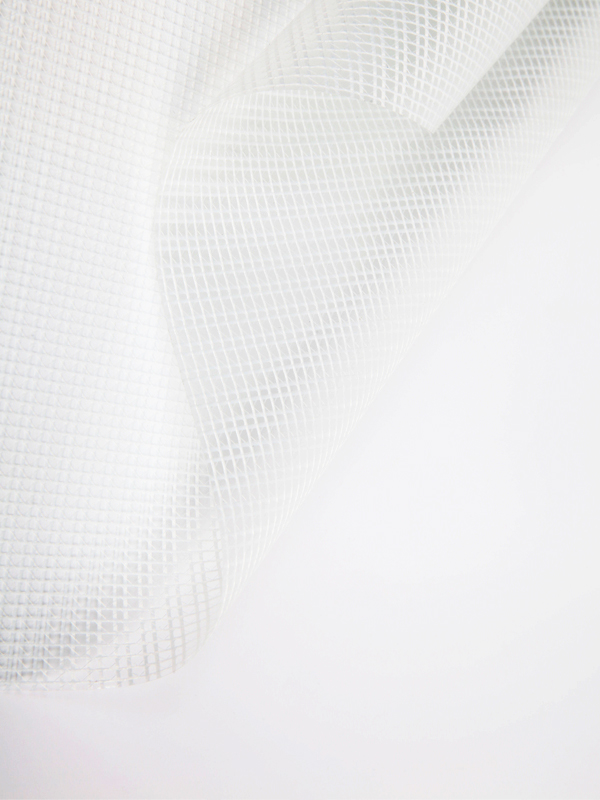
Structured loungers that inflate to a few psi and feel like actual furniture use double-wall fabric: two coated skins tied together by thousands of fine polyester threads, so the panel inflates flat instead of ballooning into a cylinder. It accepts far more pressure, holds a shape, and lets a designer build a backrest or a two-seat bench. It is also heavier, more expensive, and it needs a pump or a large stuff sack.
| Fabric family | Typical construction | Air retention | Weight and packability | Best suited to |
|---|---|---|---|---|
| PVC-coated polyester | 300D–600D base, 0.35–0.55 mm PVC both sides | Good; rises with coating weight | Medium, roughly 1.0–1.5 kg | Promotional, festival and entry-price loungers |
| TPU-coated polyester | 300D–420D base with a 0.10–0.20 mm TPU film | Very good; seams stay tight in cold | Light, roughly 0.8–1.2 kg | Premium products and cold-climate use |
| Double-wall / drop-stitch | Two PVC skins joined by threads, 0.5–1.0 mm | Excellent at 3–8 psi working pressure | Heavy, roughly 2–5 kg | Structured loungers with backrests |
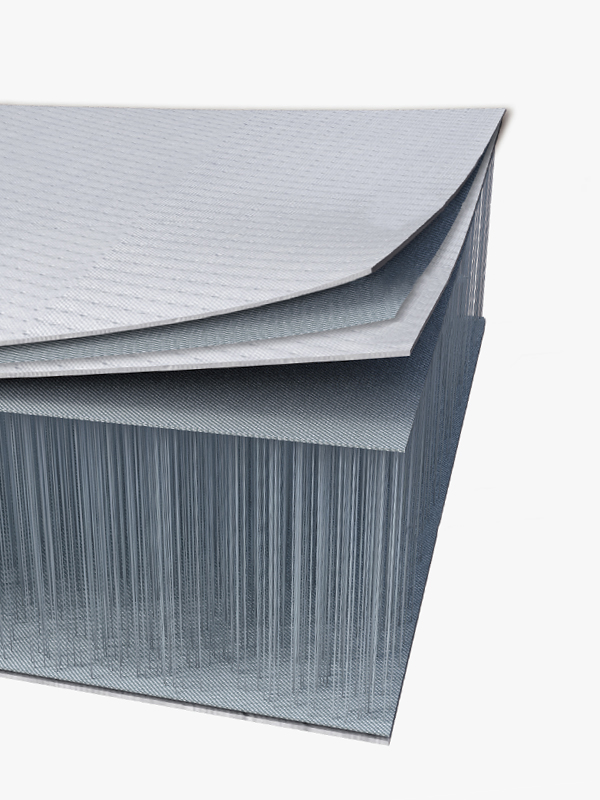 PVC Double Wall Fabric for Structured InflatablesDrop-stitched PVC fabric creates flat, rigid inflatable surfaces for loungers, SUP boards and mats, with airtightness, UV resistance and customization.View Product →
Where Cheap Air Sofas Give Up
When a lounger fails, the cause is usually one of a handful of predictable issues:
- Pinholes in an underweight coating, which turn into a slow leak that only shows up after an hour of use.
- Seam failure at the roll end, where the film was welded too hot and the coating thinned out.
- Delamination after a summer in the sun, when UV exposure attacks the bond between coating and base cloth.
- Cold cracking in winter, because a heavily plasticised compound turns rigid below about five degrees.
- Flaking prints, caused by skipping surface treatment before the ink went down.
- A buckle that releases under load, letting the roll unwind while someone is sitting on it.
Seams, Clips and the Details Nobody Inspects
On a well-made air sofa, the long seams are high-frequency welded or hot-air welded with a 6 to 10 mm overlap, and the edge is often taped for neatness rather than strength. Stitched seams alone will leak along the needle holes unless they are taped afterwards, which is why almost all credible suppliers weld. The mouth end deserves extra attention: a folded and welded hem gives the roll something to grip, and a metal-free acetal buckle is preferable to a cheap nylon one that cracks at the first cold morning.
A simple workshop test tells you most of what you need to know. Inflate a sample fully, clip it, and leave it for 24 hours at room temperature. Then leave it another eight hours in a cold room. If the fabric has gone slack, the coating or the seam is not doing its job.
Printing and Branding an Air Lounger
Most branded loungers carry full-colour artwork, and the print method matters as much as the fabric. Transfer printing gives fine detail and soft hand-feel but needs a properly treated surface to bond. Screen printing is durable and cheap for one or two spot colours. Whatever the route, a corona or primer treatment before printing is what keeps the ink from flaking off after the third trip to the beach. Print on a white-coated base if you need bright, opaque colours; on a clear or translucent base, expect the weave to show through.
Care and Storage That Adds Seasons
Air loungers are not delicate, but a few habits make a real difference:
- Shake out sand and grit before folding, since grains trapped in a crease abrade the coating from the inside.
- Wipe with mild soapy water and a soft cloth; skip solvents, bleach and abrasive pads.
- Dry fully in the shade before packing — trapped moisture is the fastest route to mildew and delamination.
- Store loosely rolled or folded in a cool, dry place rather than compressed under heavy gear.
- Keep it out of a hot car boot for long periods, where sustained heat softens the coating and can weld the fabric to itself.
Notes for Brands Sourcing Air Loungers
If you are specifying an inflatable lounger air sofa for retail, a vague specification will come back to haunt you. Ask for the coating weight in grams per square metre, not just the word "PVC". Ask for the base fabric count, the finished thickness, the weld method and the buckle material. Then ask for a 24-hour air-hold result and a cold-fold test on the actual production roll, not on a hand sample.
MSD operates an 180,000 square metre facility with around 120 technical staff, and our coated fabrics ship to more than 70 countries. For inflatable products we can supply roll goods or cut and welded panels, and we are comfortable discussing coating formulations for cold climates or higher puncture resistance. If you would like the background on the company, there is more about our plant and history here.
 PVC Inflatable Fabric for Loungers and Air SofasDurable PVC-coated reinforced fabric for inflatable loungers and air sofas, offering tear resistance, waterproofing, repairability and optional UV or anti-fungal treatments.View Product →
The Short Version
An inflatable lounger air sofa is a simple idea that only works when the material is right. Choose a coating heavy enough to hold air, a base cloth strong enough to shrug off gravel, a welded seam that survives being rolled along the same crease, and a buckle that stays closed under a person's weight. Get those four things right and the product does the rest — quietly, on a beach, for several summers.