Content
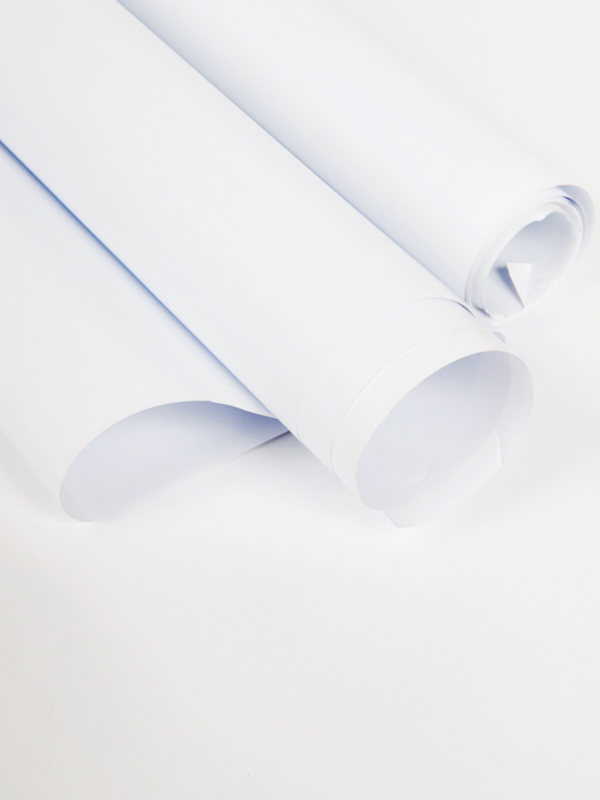
MSD PETG Film functions as a transparent thermoplastic sheet material employed in numerous fabrication, packaging, and protective roles. It originates from polyethylene terephthalate modified with glycol during the polymerization stage. The addition of glycol alters the polymer chain structure, resulting in a copolymer that exhibits improved flexibility and resistance to impact compared to standard PET. This modification lowers the tendency toward brittleness, allowing the film to endure bending, forming, and incidental contact more effectively while preserving strong optical characteristics.
The material delivers consistent clarity, permitting light to travel through with limited scattering. It combines this visibility with sufficient mechanical strength to handle routine stresses. Such attributes support its selection in scenarios that call for both aesthetic presentation and functional reliability.
Core Attributes
Clarity remains central to the film's appeal. It offers a sharp, undistorted view of underlying items or graphics, which proves beneficial in applications involving product display or inspection.
Impact absorption provides dependable protection. The film deforms slightly under force before recovering, reducing the chance of sudden failure from drops or collisions.
Thermoforming compatibility enables straightforward shaping. The material becomes pliable at moderate temperatures, then adapts to molds using vacuum, pressure, or simple bending techniques. Cooled forms retain detail with minimal risk of cracking when processing conditions stay appropriate.
Chemical stability withstands contact with various everyday substances, including oils, mild acids, and cleaning solutions. It maintains structural integrity in typical exposure situations.
Thermal performance suits standard indoor environments and limited outdoor settings. The film avoids pronounced deformation across common temperature variations, though heat requires careful consideration.
Surface acceptance supports printing, coating, and bonding processes. Inks and adhesives adhere reliably, yielding sharp details and lasting color when surfaces receive proper treatment.
Workability includes precise cutting, punching, drilling, and joining methods. These features accommodate both manual operations and high-speed production setups.
Manufacturing Sequence
Production commences with resin formation. Monomers combine under controlled conditions, with glycol incorporation creating the copolymer. The resin solidifies into pellets suitable for storage and transport.
Pellets enter an extruder, where applied heat transforms them into a uniform molten state. The viscous material flows through a broad, flat die, spreading into a continuous sheet.
Cooling rolls immediately contact the emerging sheet, solidifying it while controlling thickness via adjustable gaps and line speeds. Surface characteristics develop during this phase, influenced by roll texture and temperature uniformity.
Edge trimming eliminates uneven margins, ensuring consistent width. The sheet then winds onto rolls under controlled tension to preserve flatness and avoid creases.
Inline monitoring assesses optical properties, dimensional accuracy, and surface condition throughout the process. Detected inconsistencies prompt corrective actions or section removal.
Process adjustments allow for varied finishes, including matte textures to reduce reflections, glossy appearances for enhanced sheen, or integrated colors for specific visual effects. The approach focuses on continuous output with reduced material waste.
Packaging Roles
Packaging utilizes PETG film's transparency and shaping ease. Direct visibility of contents assists consumer evaluation in retail contexts, particularly for items like personal accessories, small electronics, or confectionery.
Blister and clamshell configurations enclose products securely. Toughness shields against punctures or deformation during handling and transport.
Food-related containers and lids apply the material where contact compliance exists. It preserves item freshness while enabling visual checks. Resistance to common contaminants supports use in preparation and service areas.
Medical packaging draws on sterilizability and clarity. Trays and covers maintain hygiene standards, allowing inspection without breach of seal. The film withstands common sterilization procedures without compromising barrier function.
Tailored shapes optimize material usage by conforming closely to contents. This precision benefits both large-scale operations and specialized packaging needs.
Signage and Presentation Applications
Signage employs PETG film for elements requiring durable graphics. Printed surfaces retain legibility and color intensity under typical lighting.
Retail displays form into structured formats that engage viewers. The material withstands moderate public interaction without rapid wear.
Backlit components diffuse light uniformly across their area. Transparency supports even illumination in signage or decorative panels.
Promotional items assemble with ease due to low weight. They tolerate frequent repositioning in temporary setups or seasonal campaigns.
Indoor environments see primary deployment, with occasional moderate exterior placement when exposure remains controlled.
Healthcare and Laboratory Uses
Healthcare integrates PETG film into visible protective components. Housings permit observation of mechanisms or contents.
Sterile trays and barriers endure sanitation routines. Stability against disinfectants facilitates repeated processing cycles.
Laboratory vessels benefit from minimal interaction with many substances. Clarity enables ongoing assessment without interference.
Shielding layers safeguard equipment while preserving operational views.
Automotive and Industrial Applications
Automotive settings incorporate the film in interior trim or protective covers. Impact handling suits zones prone to contact.
Industrial guards create transparent barriers around machinery. Visibility aids operator awareness of processes.
Electronic housings defend against minor debris or shocks. Formability accommodates intricate geometries.
Prototyping and fixtures form quickly for evaluation purposes. Ease of modification shortens iteration periods.
Environmental Profile
Recyclability permits PETG film to join thermoplastic collection systems. Reprocessed material yields new sheets or items, promoting resource reuse.
The glycol modification introduces minor distinctions from standard PET in certain sorting operations, though separation technologies progress steadily.
Production prioritizes resource efficiency to curb consumption. Accurate forming limits excess, and extended durability decreases replacement rates.
These elements contribute to mindful material choices when supported by effective recovery channels.
| Aspect | Key Points |
|---|---|
| Recyclability | Joins thermoplastic recycling systems; reprocessed into new sheets/products |
| Difference from standard PET | Glycol modification causes minor sorting variations |
| Sorting & Technology | Separation technologies continue to improve steadily |
| Production Efficiency | Focuses on resource conservation and reduced consumption |
| Material Usage & Durability | Precise forming minimizes waste; long service life lowers replacement frequency |
| Overall Contribution | Supports responsible material selection when paired with effective recovery systems |
Recognized Limitations
Heat tolerance stays moderate. Softening occurs at levels that constrain proximity to elevated temperatures.
Surface vulnerability to abrasion appears on untreated finishes. Additional layers sometimes enhance resistance.
Acquisition cost exceeds certain conventional options. Long-term performance and reduced maintenance often counterbalance initial expense.
Sustained ultraviolet influence may induce gradual appearance shifts absent protective measures. Grade selection aligned with conditions mitigates change.
Shaping demands precise control of heat, timing, and cooling to avert issues like voids or warping. Operational familiarity produces dependable outcomes.
Comparative Overview
Relative to standard PET, glycol enhancement boosts flexibility and impact performance while modestly lowering peak temperature capability.
In contrast to PVC, PETG commonly supplies clearer optics and more straightforward forming, alongside a separate end-of-life profile.
Polycarbonate yields impact strength under severe loads but generally involves distinct processing demands.
Acrylic achieves notable transparency yet exhibits reduced tolerance to abrupt forces.
Selection rests on the desired equilibrium among durability, visual quality, expense, and suitability for intended conditions.
Shanghai MSD International Trade Co., Ltd
PETG film is a versatile and reliable material that effectively balances transparency, durability, impact resistance, formability, and recyclability across a wide range of applications, including packaging, signage, healthcare, automotive, and industrial uses. Shanghai MSD consistently adheres to stable production standards and prioritizes efficient and responsible manufacturing practices. Their products offer a practical option for businesses seeking long-term reliability without sacrificing transparency and toughness. By choosing MSD's PETG film, companies can not only meet their functional needs but also contribute to a more sustainable material cycle, making it a smart choice for future-oriented manufacturing and design projects.

English
русский
Français
Español
عربى